Answering the Big Question Fast: Are You Actually Protected?
You probably feel safe because you have strong passwords, credit freezes, and free alerts from your bank. Maybe you even signed up for identity monitoring services after your email appeared in a data breach notification.
Here’s the uncomfortable truth: that’s not real identity protection.
The Federal Trade Commission recorded over 1 million identity theft reports in 2023 alone. In 2023, nearly a million Americans fell victim to identity theft, losing nearly $2 billion dollars. That number keeps climbing despite consumers having access to more security tools than ever before. More passwords. More alerts. More freezes. And yet, more fraud.
Identity theft happens approximately every 22 seconds in the United States.
Identity theft is a common crime, with some experts estimating a case of identity theft occurs every 22 seconds.
The core problem isn’t that people are careless. It’s that most people confuse “one-time prevention steps” with “continuous protection.” Changing a password after a breach is a point-in-time action. Freezing your credit is a single defensive layer. Getting an alert that something suspicious happened is reactive, not preventive.
Beyond financial hardship, identity theft can also take an emotional toll on victims. Psychological stress is very common for victims of identity theft.
Continuous protection works differently. It involves ongoing monitoring across multiple data sources, active cleanup of your exposed personal information, and restoration support when something slips through. A key identity monitoring feature is providing instant alerts when suspicious activity is detected, helping users respond quickly to threats.
What this article will help you understand:
-
Why passwords, freezes, and alerts create a dangerous false sense of security
-
What identity monitoring actually does—and what it cannot do
-
The critical difference between monitoring (knowing) and protection (fixing)
-
How to move from “feeling safe” to actually being protected
Let’s break down where the gaps are hiding.

Understanding Identity Theft
Identity theft is more than just a buzzword—it’s a growing threat that can upend your financial life in an instant. At its core, identity theft occurs when someone steals your personal and financial information—like your Social Security number, credit card details, or bank account numbers—and uses it without your permission. This stolen sensitive data can be exploited to open new credit accounts, drain your savings, or even commit crimes in your name.
The methods criminals use to steal your identity are constantly evolving. Data breaches at major companies can leak millions of records overnight. Phishing scams trick you into revealing sensitive information. Even the physical theft of important documents, like your driver’s license or bank statements, can put your identity at risk.
Understanding these risks is the first step toward real protection. Identity theft protection services are designed to help you stay ahead of these threats. With features like identity monitoring and credit monitoring, these services scan for suspicious activity tied to your personal and financial information, alerting you to potential problems before they spiral out of control. By taking proactive steps—like securing sensitive documents, monitoring your credit, and using reputable protection services—you can better safeguard your identity, your credit, and your financial future.
Types of Identity Theft
Identity theft isn’t a one-size-fits-all crime. There are several distinct types, each targeting different aspects of your personal and financial life—and each requiring specific strategies to protect against.
Financial identity theft is the most common form. Here, criminals use stolen credit and debit cards, bank account numbers, or other financial information to make unauthorized purchases, open new accounts, or even take out loans in your name. The impact can be immediate, with unexplained withdrawals or new accounts appearing on your credit report.
Medical identity theft is a growing concern. In this scenario, someone uses your personal information to receive medical care, buy prescription drugs, or file false insurance claims. Not only can this leave you with unexpected medical bills, but it can also compromise your medical records, putting your health and privacy at risk.
Tax identity theft occurs when a thief uses your Social Security number to file a fraudulent tax return and claim your refund. Victims often discover the crime only after the IRS rejects their legitimate return or notifies them of suspicious activity.
Being aware of these different types of identity theft is crucial. Each one exploits different vulnerabilities—whether it’s your credit and debit cards, your medical care records, or your tax information. Protecting yourself means staying vigilant across all your accounts and using identity theft protection services that monitor for a wide range of threats.
Why Passwords and 2FA Alone Don’t Equal Identity Protection
Better passwords and two-factor authentication are essential basics. Use them. Keep using them. But understand what they actually protect—and what they don’t.
Passwords and 2FA guard the door to your personal accounts. They prevent unauthorized access to your email, your bank account, your social media profiles. That’s important.
But consider what happened in 2024 when a major healthcare provider experienced a data breach. Millions of records leaked, including Social Security numbers, dates of birth, home addresses, and phone numbers. The strongest password in the world wouldn’t have stopped that exposure—because the breach happened on the company’s servers, not through individual user logins.
What passwords and 2FA actually protect:
-
Access to specific online accounts (banking, email, shopping)
-
Login-based transactions and account changes
-
Sessions on devices you control
What passwords and 2FA do not protect:
-
Your data sitting in public records or data broker databases
-
Leaked SSNs from breaches at companies you’ve done business with
-
Your credit file at the three bureaus (Equifax, Experian, TransUnion)
-
Phone numbers sold to robocall and spam operations
-
Sensitive information already circulating on the dark web
Here’s the scenario that catches people off guard: an identity thief doesn’t need to log into your existing bank account to steal from you. They can open new accounts in your name using your leaked SSN and personal info. They can file a fraudulent tax return. They can apply for loans you’ll never see until collections calls start.
A password manager and antivirus software are step one of a five-step process. They’re necessary. But treating them as complete identity theft protection leaves you exposed to everything that happens outside your login screens.
Why Credit Freezes and “Locks” Give a Dangerous Sense of Safety
A security freeze on your credit file is one of the most powerful tools consumers have against new credit fraud. When you freeze your credit report at the major bureaus, lenders can’t pull your file to approve new credit applications—which makes it much harder for criminals to open credit cards or loans in your name.
By 2024, all three credit bureaus offered free freezes, and many competing services started promoting “one-tap credit locks” as the centerpiece of identity theft protection. This led millions of consumers to believe they were fully protected.
They’re not.
What credit freezes and locks actually stop:
-
New credit accounts being opened in your name (credit cards, mortgages, auto loans)
-
Hard inquiries from lenders who check your credit file before approving applications
What credit freezes and locks do not stop:
-
Existing account takeovers (someone gaining access to your current bank account or credit and debit cards)
-
Tax fraud—criminals filing fake returns using your SSN to steal your refund
-
Medical identity theft—someone using your information to obtain medical care or prescriptions
-
Government benefit fraud—fraudsters claiming unemployment or stimulus payments in your name
-
Data broker exposure—your address, phone numbers, and relatives listed on people-search sites
The IRS Identity Theft Central reports that tax refund fraud remains a persistent problem, and credit freezes do nothing to prevent it. Neither do they address someone using your driver’s license number to pass a background check, or your medical bills showing up for procedures you never had.
Think of a credit freeze as locking your front door. That’s smart. But if your name, SSN, address history, and savings account details have already been copied and sold across the dark web and data broker networks, thieves have plenty of other ways in.
Some identity theft protection service providers market credit locks as their core benefit. It’s a valuable layer, but it’s one layer. Treating it as complete protection creates dangerous overconfidence.
You still need continuous identity monitoring. You still need active data removal from broker sites. And you need a plan for what happens when something slips through.
The Problem with Free Alerts and “Set-It-and-Forget-It” Monitoring
Your bank texts you when there’s a large purchase. Your credit card app pings you for suspicious activity. Maybe you signed up for free identity monitoring through a “credit journey” feature that checks your credit score monthly. Chase Credit Journey, for example, offers free identity monitoring without requiring a Chase account.
These feel like protection. They’re not. They’re notifications that something already happened.
The core misconception: Alerts tell you about problems. They don’t prevent the problems, remove your exposed data, or stop your sensitive information from being resold.
Most free tools operate on a narrow slice of your identity risk:
-
They monitor one channel (your credit file, one email address, one bank account)
-
They only trigger on specific events (hard pulls, new accounts, charges over a certain amount)
-
They do nothing about data brokers, spam lists, robocall sources, or old breaches where your info is still circulating
-
They place the burden of action entirely on you
Consumers are entitled to receive a free copy of their credit reports, and this is often promoted as part of free credit monitoring services.
Here’s a common 2025 scenario: You receive a dark web surveillance alert that your email and phone number were found in a leaked database. Now what?
The alert doesn’t tell you what else was exposed. It doesn’t identify who has your information or where it’s being sold. It doesn’t file opt-out requests with the dozens of data brokers listing your address. It just says, “Your data was found. Good luck.”
The real cost that free tools don’t mention: Time and stress.
When identity fraud hits, victims typically spend 100+ hours on phone calls, writing dispute letters, filing a police report, contacting creditors, and following up with credit bureaus. Free alerts don’t do any of that work. They just let you know the work is now yours to handle.
This is why alerts alone—whether from your bank, a free credit monitoring app, or a breach notification—are not identity theft protection. They’re the start of a problem, not a solution. Many identity theft protection services offer identity theft insurance to help cover losses incurred due to identity theft.
Identity Monitoring vs True Identity Theft Protection: What’s the Difference?
This distinction matters more than most consumers realize.
Identity monitoring is knowing. It’s the practice of scanning data sources—credit bureaus, dark web marketplaces, public records—for signs that your personal and financial information has been exposed or misused.
Identity protection is knowing, plus fixing, plus preventing future damage.
Here’s how they compare:
What identity monitoring services typically provide:
-
Tracking of SSNs, email addresses, phone numbers, and financial information across databases
-
Alerts when your data appears in a new breach or on the dark web
-
Credit report monitoring for new accounts, inquiries, and address changes
-
Sometimes a monthly credit score update
-
Credit monitoring is a standard feature in many identity monitoring services, tracking changes across credit reports.
Some providers, like Identity Guard, use IBM artificial intelligence to enhance their identity monitoring feature. Even entry-level plans, such as those from IdentityIQ, now include dark web monitoring as a core identity monitoring feature.
What true identity theft protection adds: In addition to traditional safeguards, effective protection often involves monitoring and removing personal information from data brokers, who collect and sell your details without consent.
-
Active data broker removals (not just a list of sites—actual opt-out requests filed on your behalf)
-
Ongoing tracking to confirm removals and catch reinsertions
-
Identity restoration support when fraud occurs (help with disputes, paperwork, and creditor calls)
-
A secure paper trail documenting what was exposed and what was done about it
-
Financial protection through identity theft insurance
Many plans marketed as “identity theft protection” in 2026 are actually just monitoring with an insurance policy attached. They don’t proactively clean up your exposed data. They don’t stop data brokers from re-listing your information next month. They watch and alert, but they don’t act.
The gap between point-in-time actions (change your password, freeze your credit, check your credit file once a year) and continuous protection (watching, removing, restoring over months and years) is where most identity fraud actually happens.
For a deeper comparison, see our guide on Identity Protection vs Monitoring.

Why Identity Monitoring as We Know It Is Broken in 2026
Traditional identity monitoring in 2026 focuses heavily on credit monitoring and dark web monitoring alerts. It promises “triple-bureau monitoring,” “real-time dark web scans,” and sometimes “up to $1 million in coverage.”
What it doesn’t promise: doing the hard work for you.
Here are the three core problems with legacy monitoring:
1. It’s reactive.
You only hear about problems after your data is already exposed, after the fraud alert triggers, or after unexplained withdrawals appear on your account. By then, the damage has started. The identity thief has already used your information to open new accounts, steal sensitive information, or claim benefits in your name.
2. It’s incomplete.
Many monitoring tools ignore entire categories of risk:
-
Robocalls and spam texts powered by your leaked phone numbers
-
Non-credit fraud like medical identity theft or government benefit scams (CFPB and AARP Fraud Watch both document these growing threats)
-
Data broker exposure that makes social engineering attacks easier
-
Stolen funds from account takeovers on accounts they don’t monitor
3. It’s manual.
When fraud hits, the victim—not the monitoring service—spends weeks or months:
-
Calling creditors and disputing fraudulent charges
-
Filing reports with the Federal Trade Commission and local police
-
Contacting each of the three bureaus to dispute inaccurate entries
-
Requesting removal from data brokers (and re-requesting when the data reappears)
-
Tracking important documents and responses across multiple organizations
Dark web monitoring alone is particularly misleading. These scans check known breach databases and some underground forums. But they often miss private Telegram channels, closed criminal networks, or data that was sold once and then used offline. A “no results found” message doesn’t mean “no risk”—it means the scan didn’t find anything in the places it looked.
For a detailed breakdown of what’s broken and what actually works, see our article: Identity Monitoring Is Broken — Here’s What Actually Works in 2026.
The Missing Piece: Your Data Is Everywhere (Especially Data Brokers)
Data brokers are the invisible infrastructure of identity exposure.
These companies—and there are thousands of them—collect, aggregate, and sell profiles on nearly every adult in the United States. Their data comes from public records, marketing lists, online activity, utility records, property transactions, and dozens of other sources.
Here’s what a typical 2026 data broker profile might include:
-
Your full legal name and any known aliases
-
Current address and 3–4 previous addresses
-
Multiple phone numbers (including old ones you forgot you had)
-
Email addresses associated with your name
-
Date of birth and estimated age
-
Names of relatives and known associates
-
Links to social media profiles
-
In some cases, partial SSNs or financial information
This is gold for criminals. With a profile like this, an identity thief can:
-
Pass knowledge-based verification questions (“What street did you live on in 2019?”)
-
Craft convincing phishing messages (“Hi [Your Name], we noticed unusual activity on your [Bank Name] account…”)
-
Execute SIM swap attacks by calling your carrier with detailed personal info
-
Open new credit under your name using leaked SSNs combined with accurate address and phone data
Data brokers also fuel robocalls and spam texts. Your phone number, linked to your name and location, gets sold and resold across networks designed to target you with scams.
The frustrating cycle: Some identity theft protection service providers claim to help with data broker removal. But most just provide a list of sites and instructions for submitting opt-out requests yourself. That’s dozens of forms, each with different requirements, and no guarantee your data won’t reappear next month when the broker ingests a new public records update. Some competitors bundle additional features, such as social media monitoring and account surveillance, under their ‘other services’ or premium plans, offering a broader suite of protection options beyond basic identity monitoring.
Even after a successful opt-out, many brokers re-add your information within weeks. Without continuous monitoring and repeated removal requests, your personal info keeps cycling back onto the web.
This is the missing piece most consumers never see: the relentless, automated exposure that happens in the background, whether or not you’re paying attention.
Dark Web Surveillance: The Hidden Threats Most People Miss
The dark web is a shadowy corner of the internet where stolen personal and financial information is bought and sold by cybercriminals. Unlike the regular web, you can’t stumble onto these sites with a simple Google search—they’re intentionally hidden, making them a haven for illegal activity, including identity theft.
Dark web surveillance is a critical, but often overlooked, layer of identity theft protection. This service scans underground forums and marketplaces for your sensitive data—like Social Security numbers, credit card details, and bank account information. If your information is found, it’s a major red flag that you could be at risk for identity theft.
Why does this matter? Because by the time your data appears on the dark web, it’s already been compromised—often as a result of a data breach or phishing attack. Early detection through dark web monitoring gives you a crucial head start, allowing you to take action before criminals can exploit your information further.
Identity theft protection services that include dark web surveillance help you spot the signs of identity theft that most people miss. By monitoring these hidden channels, you gain more protection for your personal and financial information, reducing the risk of serious damage to your credit and your identity.
Bank Account Protection: Beyond Credit Monitoring
Protecting your bank account is about more than just keeping an eye on your credit report. While credit monitoring is essential for spotting new accounts or suspicious activity, true bank account protection requires a multi-layered approach.
Start with the basics: use strong passwords and enable two-factor authentication on your online accounts. A password manager can help you create and store complex passwords, while antivirus software adds another layer of defense against malware and phishing attacks. Be especially cautious when accessing your accounts over public wi fi networks—these are prime hunting grounds for identity thieves looking to intercept sensitive information.
But even with these precautions, your bank account can still be vulnerable. Identity thieves may use stolen Social Security numbers or bank account details to gain access, make unexplained withdrawals, or open new accounts in your name. That’s why it’s important to regularly monitor your account activity for any signs of identity theft.
Identity theft protection services can help by providing both identity monitoring and credit monitoring, alerting you to suspicious activity across your accounts. These services go beyond what your bank or credit card company can offer, scanning for threats that might otherwise slip through the cracks.
In today’s digital world, protecting your bank account means staying vigilant, using the right tools, and taking proactive steps to secure your sensitive information—both online and off.
What Real, Continuous Identity Protection Looks Like
Continuous protection isn’t a checklist. It’s a loop.
Detect → Remove → Confirm → Monitor for reinsertion → Support restoration.
That cycle runs indefinitely, because identity exposure doesn’t stop. New breaches happen. Data brokers refresh their databases. Dark web markets continue trading stolen credentials.
Here’s what it looks like in practice:
A user’s email and phone number surface in a 2025 breach. At the same time, their address appears on multiple people-search sites, and their debit card numbers show up in a criminal forum.
A real protection system doesn’t just send an alert and wish them well. It:
-
Notifies the user with clear, specific information about what was exposed
-
Initiates automated removal requests to every data broker and people-search site listing their info
-
Tracks those requests to confirm removals and catch re-listings
-
Monitors the dark web, credit bureaus, and financial accounts for signs of fraud
-
Provides restoration support—actual help with disputes, calls, and paperwork—if fraud occurs
-
Maintains a secure paper trail to prevent reinsertion of fraudulent data
Effective id theft protection involves continuous monitoring, proactive data removal, restoration support, and insurance coverage to help prevent online scams and data breaches.
Compare that to “checklist security”: change a password, freeze your credit, hope nothing happens. One is a living system that adapts as exposures evolve. The other is a snapshot that becomes outdated the moment the next breach occurs.
A modern identity protection framework must include:
-
Broad monitoring of SSNs, email addresses, phone numbers, and bank account details
-
Automated data broker opt-outs with tracking and re-submission as needed
-
Dark web monitoring with actionable next steps (not just warnings)
-
Identity restoration help when damage occurs
-
Meaningful identity theft insurance to cover legal fees, lost wages, and stolen funds
This is the framework Clever Shield is built on.

How Clever Shield Turns Monitoring into Real Protection
Most tools stop at alerts. Clever Shield takes action.
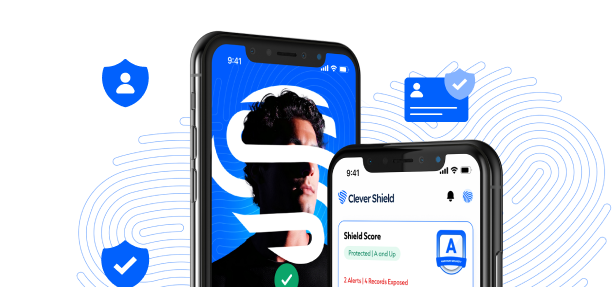
That’s the fundamental difference. While traditional identity monitoring services tell you something went wrong, Clever Shield works to fix it—and prevent it from happening again.
Clever Shield’s core pillars:
1. Automated data broker and people-search removals
Within 24 hours of detecting your information on broker sites, Clever Shield submits removal requests on your behalf. More importantly, it tracks those removals and resubmits when your data reappears. This isn’t a one-time opt-out—it’s ongoing suppression.
2. Real-time monitoring across multiple identity vectors
Clever Shield monitors your Social Security number, email addresses, phone numbers, and banking information in real time. When something changes or appears where it shouldn’t, you get clear, actionable alerts—not vague warnings.
3. Dark web monitoring with context
Finding your data on the dark web is just the start. Clever Shield pairs dark web surveillance with guidance on what to do next, and where relevant, connects the exposure to data removal actions.
4. Secure paper trail and documentation
When fraud disputes drag on, documentation matters. Clever Shield maintains a record of exposures, removal requests, and actions taken—helping shut down fraudulent accounts faster and reducing the time spent on repeat disputes.
5. Up to $1 million in identity theft insurance
If something slips through, you’re covered. The policy helps pay for legal fees, lost wages from time spent on restoration, and unreimbursed stolen funds.
The time and stress savings are significant. Clever Shield is designed to save victims hundreds of hours of phone calls, letters, and forms during identity restoration. Instead of navigating the process alone, you have a system working continuously on your behalf.
The user experience is simple:
-
Run a free scan in about 60 seconds to see where your data is currently exposed
-
Review a clear dashboard of risks—data brokers, dark web hits, potential red flags
-
Choose an optional cleanup subscription for ongoing protection and automated removals
Clever Shield doesn’t stop at warning you—it actually removes your exposed data. That’s the difference between knowing your risks and fixing them.
Common Identity Protection Misconceptions (And the Truth Behind Them)
Let’s summarize the myths that keep people feeling safe while remaining exposed.
Misconception: “I have strong passwords, so I’m safe.”
Truth: Passwords protect login access, not leaked SSNs, exposed addresses, or sensitive documents already in data broker databases. Strong passwords don’t stop someone from opening new accounts using information stolen from a breach.
Misconception: “I froze my credit in 2024, so no one can steal my identity now.”
Truth: Credit freezes stop new credit from being opened in your name. They don’t stop account takeovers, tax fraud, medical identity theft, or benefit fraud. They also don’t remove your data from public wi fi network breaches or people-search sites.
Misconception: “My bank sends fraud alerts—that’s enough monitoring.”
Truth: Bank alerts only cover one part of your financial life. They don’t monitor your credit file across the major bureaus, scan the dark web, or detect when your personal info is sold to robocall operators.
Misconception: “If something happens, my identity theft insurance will fix everything automatically.”
Truth: Insurance pays after damage occurs. It doesn’t prevent fraud, remove your exposed data, or do the legwork of restoration. You still need active monitoring and removal to prevent problems in the first place.
Misconception: “I opted out of a few people-search sites once, so I’m covered.”
Truth: Data brokers continuously reingest information from new sources. A one-time opt-out gets undone within weeks or months. Continuous, automated removal is the only way to stay ahead.
Each of these misconceptions points to the same gap: the difference between doing something once and maintaining ongoing protection.
How to Start Moving from “Feeling Safe” to Actually Being Protected
You don’t need to become a security expert. But you do need to see where the gaps are.
Practical first steps:
-
Keep using strong passwords and 2FA. They’re still essential for protecting access to your accounts. A password manager makes this easier.
-
Check if your data has appeared in major breaches. Services like Clever Shield’s free scan can show you where your email, phone, or other identifiers are exposed.
-
Review the tools you currently rely on. Bank alerts? Free credit monitoring from one bureau? Ask yourself: Do any of these remove my data from broker sites? Do any help restore my identity if fraud happens?
-
Understand what a credit freeze does and doesn’t cover. If you haven’t frozen your credit file at all three bureaus, consider doing so. But don’t treat it as complete protection.
-
Consult official resources for baseline guidance. The FTC’s IdentityTheft.gov and CISA offer practical steps for securing your digital life.
Once you see the gaps, the next step becomes clear.
Run your free Clever Shield scan today and see where your identity is really exposed—across data brokers, breach databases, and the dark web. In about 60 seconds, you’ll have a picture of your actual risk, not just a feeling of safety.
From there, you can decide if automated cleanup, continuous monitoring, and identity restoration support are worth it for your situation.
Don’t just get alerted. Get protected.
Further Reading and Next Steps on Clever Shield
To go deeper on the concepts covered here, check out these resources:
Internal guides:
-
Identity Protection vs Monitoring – A detailed comparison of what each approach actually includes
-
Identity Monitoring Is Broken — Here’s What Actually Works in 2026 – A deeper critique of legacy tools and how Clever Shield’s model addresses the gaps
-
How Data Broker Removal Works – A practical guide to understanding the exposure cycle and removal process
Authoritative external resources:
-
FTC Identity Theft Recovery – Official steps for reporting and recovering from id theft
The difference between knowing your risks and fixing them starts with one step.
Start your Clever Shield protection now.