Most people assume identity theft starts with a hack or a data breach. In reality, many attacks begin much earlier — quietly, legally, and in plain sight.
Identity thieves don’t usually guess your information. They buy it.
Through a massive ecosystem of data brokers, criminals can access detailed personal profiles long before any fraud alert ever triggers. By the time traditional identity monitoring sends a warning, the damage is often already underway.
This article breaks down exactly how identity thieves use data brokers, why monitoring alerts frequently arrive too late, and what kind of protection actually stops fraud upstream.
The Data Broker Ecosystem Most People Never See
Data brokers are companies that collect, aggregate, and sell personal information. Some operate under the label of “marketing,” “people search,” or “public records services,” but their function is the same: building detailed identity profiles for resale.
These brokers pull information from:
- Public records (property, court filings, licenses)
- Online purchases and subscriptions
- Mobile apps and SDKs
- Social media activity
- Data breaches and scraped databases
- Voter files and utility records
According to guidance published by the Consumer Financial Protection Bureau, most consumers are unaware that their data is collected, combined, and sold continuously — often without meaningful consent.
What makes this ecosystem dangerous isn’t just the volume of data, but how it’s packaged.
How Identity Thieves Turn Broker Data Into Fraud
Data brokers don’t sell random scraps of information. They sell structured identity profiles.
A single broker record may include:
- Full name and aliases
- Current and past addresses
- Phone numbers and emails
- Date of birth
- Relatives and household members
- Employment history
- Property ownership
Identity thieves combine broker data from multiple sources to build near-complete identity replicas. Once enough data points align, fraud becomes significantly easier.
This is how criminals can:
- Pass knowledge-based authentication questions
- Impersonate victims during bank calls
- Reset account passwords
- Apply for credit using partial SSNs
- Launch targeted phishing and social engineering attacks
By the time fraud occurs, the groundwork was laid weeks or months earlier.
Why Identity Monitoring Alerts Arrive Too Late
Traditional identity monitoring focuses on downstream signals — events that occur after exposure or misuse has already happened.
Most monitoring services track:
- Credit report changes
- New account openings
- Known data breaches
- Dark web dumps discovered after publication
These alerts are reactive by design.
They notify you after:
- Your information has been sold
- Your identity has been tested
- An account has already been opened
- A fraudulent transaction appears
The Federal Trade Commission explains on its identity theft recovery portal that early exposure often goes unnoticed until financial or credit damage surfaces — long after the initial leak.
The Critical Gap: Exposure vs. Exploitation
This is where most identity monitoring fails.
There is a long window between data exposure and fraud exploitation. During that window:
- Your data circulates through broker marketplaces
- Criminals test fragments across platforms
- Scammers prepare personalized attacks
- No alert is triggered yet
Monitoring tools typically can’t see this stage.
They don’t track:
- Broker-level resale activity
- Profile aggregation across sources
- Early-stage identity probing
- Silent credential validation attempts
By the time an alert fires, the attack is already in motion.
How Data Brokers Enable Modern Identity Theft
Modern identity theft is less about brute-force hacking and more about precision.
Data brokers enable:
Targeted Phishing
Emails and texts that reference real addresses, relatives, employers, or recent purchases.
Account Takeovers
Using broker data to bypass security questions and reset credentials.
Synthetic Identity Fraud
Combining real and fabricated information to create new credit profiles.
Social Engineering Attacks
Phone calls that sound legitimate because the caller already knows your personal details.
The Cybersecurity and Infrastructure Security Agency has repeatedly warned that identity theft is increasingly driven by data aggregation rather than single-point breaches.
Why Manual Opt-Outs Don’t Solve the Problem
In theory, consumers can opt out of data brokers manually.
In practice, this approach fails because:
- There are hundreds of broker sites
- Each has a different opt-out process
- Many require identity verification uploads
- Data is frequently republished
- New brokers appear constantly
Even successful removals are often temporary. Broker networks refresh and resync data continuously.
This is why identity exposure tends to reappear even after manual cleanup.
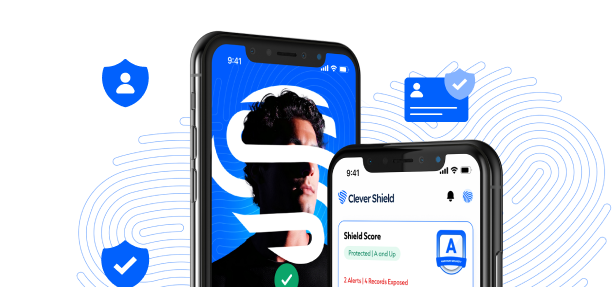
How Clever Shield Stops Identity Theft Upstream
Clever Shield approaches identity protection differently — by targeting exposure before exploitation.
Instead of waiting for alerts, Clever Shield focuses on active prevention.
Automated Data Broker Removals
Clever Shield continuously removes your personal information from broker databases and tracks removals over time, preventing republishing cycles.
Real-Time Identity Monitoring Beyond Credit
Monitoring includes emails, phone numbers, SSNs, and behavioral signals — not just credit reports.
Dark Web + Early Signal Detection
When identity fragments surface in risky environments, Clever Shield detects them before they turn into fraud.
Identity Restoration Infrastructure
If misuse occurs, licensed specialists handle disputes, affidavits, and coordination — removing the burden from the victim.
This proactive model aligns with the shift toward upstream prevention outlined in AARP’s fraud prevention research.
Why Monitoring Alone Is No Longer Enough
Monitoring still has value — but only as one layer.
On its own, monitoring:
- Does not remove exposed data
- Does not stop resale
- Does not prevent early-stage testing
- Does not restore identity automatically
This is why many victims say, “I had monitoring — and still got scammed.”
The problem isn’t monitoring itself. It’s relying on monitoring without removal and response.
What Active Identity Protection Looks Like in 2026
Modern identity protection requires three layers:
- Detection — seeing exposure early
- Removal — eliminating data from circulation
- Response — restoring identity if misuse occurs
Clever Shield integrates all three.
That’s why it functions as both monitoring and protection — not just alerts.
Final Thoughts: Alerts Aren’t Protection
Identity thieves don’t wait for alerts.
They operate upstream — in data broker networks, resale markets, and aggregation pipelines most consumers never see.
By the time an alert appears, the identity profile has already been built.
If you want to understand how exposed your information already is, start with a free scan and see which brokers currently have your data.
Because the real battle against identity theft happens long before the alert.