Free identity protection in 2026: what you actually get (answer the query fast)
If you’re searching for free identity protection in 2026, you’re not alone. Banks, credit card issuers, and fintech apps all advertise some form of “identity protection” at no cost. But here’s the reality: most free options only cover narrow slices of the problem—like credit alerts from a single bureau or a breach notification for one email address. Notifications about breaches or suspicious activity may arrive via email or physical mail, so it’s important to check both regularly for timely updates.
This article breaks down exactly what free tools typically include versus what they miss: automated data broker removal, dark web action, restoration help, and insurance coverage. You’ll walk away knowing whether free is enough for your situation—or whether you need something that actually fixes problems instead of just flagging them.
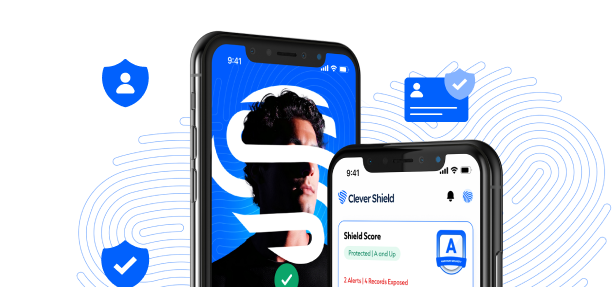
Clever Shield is designed as an active upgrade to free alerts. It doesn’t just notify you when something looks wrong—it automates data removal from broker sites, monitors your SSN, emails, phone numbers, and bank accounts in real time, and backs everything with up to $1 million in identity theft insurance.
You can run a free Clever Shield scan in about 60 seconds to see where your personal information is already exposed. Then you can decide if deeper protection makes sense.
Here’s what this article covers:
- What “free identity protection” actually means in 2026
- Common types of free tools and their limitations
- Real-world scenarios where free falls short
- How Clever Shield fills the gaps without replacing free tools
- A practical checklist to get started today
What “free identity protection” usually means today
“Free identity protection” is often bundled quietly with services you already use. Your bank might include it. Your employer’s HR benefits might offer it. If you’ve been caught up in a data breach—and statistically, you probably have—a company may have sent you an offer for 12–24 months of complimentary monitoring.
These offers come from several common sources:
- Data breach settlements (2024–2026): Major retail, healthcare, and financial breaches often result in free monitoring offers to affected consumers. These typically last 12–24 months and cover limited data points.
- Credit card issuers and banks: Many Visa and Mastercard-issuing banks now include basic credit monitoring as a perk, though coverage is usually limited to one credit bureau.
- Employer and membership benefits: Some HR packages, AAA-style memberships, and insurance policies bundle identity monitoring with their standard offerings. Certain employer-provided identity protection services may also help verify employment eligibility and prevent unauthorized use of your personal information for employment purposes.
The common thread? These services typically include:
- Credit monitoring from a single bureau (often TransUnion or Experian)
- Basic alerts when a lender pulls your credit or opens a new account
- Simple breach notifications if your email appears in a known breach database
What they rarely include:
- Automated removal of your data from people-search and data broker sites
- Full dark web monitoring across multiple SSNs, phone numbers, and financial accounts
- End-to-end fraud dispute handling with documentation and follow-up
- Insurance that covers recovery costs if identity theft actually happens
Understanding this distinction is critical. Free tools give you pieces of the puzzle. But when something goes wrong, you’re still the one making calls, filing disputes, and tracking responses.
Common types of free identity protection tools
Let’s break down what’s actually out there so you can see what protections you might already have—and where the coverage stops.
Free credit monitoring from banks and card issuers
Many banks and credit card companies offer credit monitoring as a no-cost perk. Here’s what you typically get:
- Alerts for new accounts when a lender pulls your credit report
- Credit score change updates from one bureau (not all three)
- Limited coverage focused only on new accounts, not existing account misuse
Reviewing your credit report regularly can help you determine if any new accounts have been opened fraudulently in your name.
This means if someone takes over your existing bank account or drains your PayPal balance, these alerts may never fire—because no new credit line was opened.
Data-breach monitoring services
After a major breach, affected companies often offer one or more years of free monitoring. You’ve probably received these letters:
- Notifications sent by physical mail or email, with enrollment deadlines
- Coverage tied to a specific breach, typically expiring after 12–24 months
- Monitoring focused on the data compromised in that particular incident
If you’ve ignored these offers or let them expire, that coverage is gone. And new breaches don’t automatically renew old protections.
Employer, union, or association benefits
Some organizations bundle identity monitoring with HR benefits, AAA-style memberships, or insurance policies:
- Access to a helpline and basic monitoring dashboards
- Limited restoration support, often just advice rather than hands-on help
- Coverage that may end when you leave the organization or cancel membership
Free tools you sign up for yourself
You can also activate several free protections on your own:
| Free Tool | What It Does | Limitations |
|---|---|---|
| Security freeze (credit freeze) | A security freeze prevents unauthorized access to your credit report by blocking new lenders from viewing your credit file without your permission | Doesn’t stop existing account fraud; you must unfreeze when applying for credit |
| Fraud alerts | Placing a fraud alert is a protective measure that asks lenders to verify your identity before opening new credit. You can initiate a fraud alert by contacting credit bureaus. | Only lasts one year (or seven with an identity theft report) |
| Free password managers | Stores strong passwords securely | Limited tiers may lack family sharing or advanced features |
| Authenticator apps | Adds two-factor authentication to accounts | Protects login but doesn’t monitor for identity misuse |
These are all valuable. The Federal Trade Commission and the Consumer Financial Protection Bureau strongly recommend credit freezes as a baseline defense. But none of these tools remove your data from the hundreds of data broker and people-search sites that sell your name, address, phone number, and relatives to anyone who searches.
What free identity protection really covers (and where it stops)
Free tools are valuable—but they’re mostly reactive and narrow in scope. They can tell you something happened. They rarely help you recover your finances or resolve the aftermath of identity theft. They rarely fix anything for you.
What free tools typically cover:
- Credit inquiries and new-account alerts from one (sometimes all three) bureaus
- Notifications if your email or password appears in a known data breach
- Optional fraud resolution phone support with checklists and templates
- Access to your free credit report weekly via AnnualCreditReport.com
What free tools almost never cover:
- No automated data broker removal. Hundreds of people-search and marketing sites still sell your personal information. Free tools don’t touch them.
- No unified monitoring dashboard. You can’t track multiple emails, phone numbers, SSNs, and bank accounts in one place.
- Little or no help with disputes. You’re on your own calling banks, bureaus, and agencies to close fraudulent accounts.
- No insurance. If identity theft costs you money in legal fees, lost wages, or recovery expenses, free tools won’t reimburse you.
- No monitoring of medical records. Free tools do not monitor your medical records for signs of identity theft, which can lead to errors or fraud in your healthcare history.
The FTC’s identity recovery resource at IdentityTheft.gov outlines the steps a victim of identity theft must take: file reports, contact creditors, dispute fraudulent entries, track responses, and follow up repeatedly. It’s a helpful roadmap—but it assumes you’ll execute every step yourself. CFPB guidance emphasizes the same reality: monitoring and disputing are your responsibility.
This is where the difference between “free” and “comprehensive” becomes clear. Free tells you the problem exists. Comprehensive helps you fix it.
Real-world scenarios where free tools fall short
Trade-offs become obvious in realistic 2024–2026 identity theft situations. Here are three scenarios that illustrate the gap.
- You receive a notice from the IRS about a tax return you never filed, or multiple tax returns are submitted in your name. This is a common sign of identity theft, and free identity protection tools may not always detect or alert you to this type of fraud.
- Your credit card is used for a large purchase in another state, but your free monitoring service only notifies you of new account openings, not suspicious transactions.
- Someone opens a utility account using your information, but your free service only tracks credit report changes, missing this type of non-credit fraud.
Scenario 1: Data broker exposure and nonstop robocalls
A consumer enters their phone number and address into a sweepstakes form or online purchase in 2024. Within weeks, that information is scraped and sold across dozens of data broker sites. The result?
- Constant robocalls and scam texts
- Phishing emails that reference their real address and relatives
- Social engineering attempts that feel disturbingly personal
Free breach alerts don’t remove this data. They might notify you if your email appeared in a breach—but they won’t stop the underlying exposure fueling these scams.
How Clever Shield responds differently: Automated data broker removals begin within 24 hours. Your name, address, and phone number start disappearing from people-search sites. Over time, spam calls and targeted phishing decrease because scammers can’t find you as easily.
Scenario 2: Account takeover that never hits your credit
In 2025, a criminal uses password reuse and phishing to take over someone’s PayPal, Venmo, or bank account. They drain money, change contact information, and lock out the real owner.
Here’s the problem: many free identity protection tools tied to credit reports never alert the victim. No new credit line was opened, so credit monitoring sees nothing.
How real-time monitoring helps: Tools that monitor email addresses, phone numbers, and financial account info can signal compromised credentials earlier. Dark web alerts can catch your login credentials being sold before they’re used.
Scenario 3: Synthetic identity fraud in a child’s name
Fraudsters combine a child’s Social Security number with fake details to open loan or utility accounts. These accounts go unnoticed for years—until the child turns 18 and applies for their first credit card.
Free adult credit monitoring from a bank wouldn’t cover the child. Most post-breach offers don’t track minors. Kids don’t have credit files to monitor until something bad has already happened.
What comprehensive tools can do: Monitor SSNs for any credit activity, even when the victim isn’t actively using credit. Detect unusual activity tied to the number itself, not just existing accounts.

In each scenario, free tools provide a piece of the puzzle—maybe a single alert. But the victim still spends months on calls, paperwork, and disputes. The FTC estimates identity theft recovery can take hundreds of hours in complex cases. Free tools don’t change that math.
How Clever Shield upgrades free identity protection (without replacing it)
You should absolutely use any free protections you already have. Bank alerts, free credit freezes, and breach monitoring all add legitimate layers to your security.
Clever Shield is designed as the logical upgrade that fills the biggest gaps free tools leave behind:
- Automated action instead of just notifications. When Clever Shield finds your data on data broker sites, it doesn’t just alert you—it sends removal requests automatically.
- Broader monitoring across data brokers, dark web, and financial touchpoints. Track multiple SSNs, emails, phone numbers, and bank accounts in one dashboard.
- End-to-end identity restoration support. Clear documentation and guided recovery when fraud occurs, including help creating a recovery plan to restore your financial health after an incident, similar to the process outlined by the FTC.
Specific features that contrast with free coverage:
| Free Tools | Clever Shield |
|---|---|
| Alert you when a breach includes your email | Monitor dark web for your SSN, bank info, and credentials—then guide you to lock down accounts |
| Tell you to manually opt out of data brokers | Automate removals within 24 hours and track them over time |
| Provide a checklist if fraud happens | Maintain a secure paper trail to stop fraudulent data from being reinserted |
| No insurance or limited coverage | Up to $1 million identity theft insurance for eligible recovery costs |
The secure paper trail matters
When you’re a victim of identity theft, you end up telling your story to banks, bureaus, credit card companies, and government agencies—sometimes dozens of times. Each one asks for documentation. Each one wants proof.
Clever Shield tracks disputes, removal requests, and responses in one place. This documentation can help prevent fraudulent data from being reinserted and reduces the time you spend repeating yourself.
The experience starts free
Run a Clever Shield scan in about 60 seconds. You’ll see which data brokers and dark web sources already have your information. Review the results in a simple dashboard. Then decide whether you want to pay for automated cleanup and ongoing protection—or keep managing it manually.
Comparing free vs. upgraded identity protection tools (coverage, not price)
This isn’t about cost. It’s about what protection you actually get.
Free-only coverage:
- One-bureau credit alerts and score tracking
- Occasional data breach alerts tied to a single email or account
- DIY recovery where you call banks, bureaus, and agencies on your own
- No removal of your data from people-search sites
- No insurance if recovery costs money
Free + Clever Shield coverage:
- Ongoing dark web and financial-info monitoring across multiple data points
- Automated removal from dozens of data brokers and people-search sites, with progress tracking
- Real-time alerts when your SSN, phone number, or bank info appears in suspicious activity
- Guided recovery backed by documentation and up to $1 million in insurance
- Reduced spam, robocalls, and social engineering attacks over time
Combining free tools (like credit freezes and bank alerts) with Clever Shield’s active measures gives layered protection across:
- New-account fraud (freezes plus monitoring)
- Existing-account takeover (real-time alerts plus dark web scanning)
- Long-term data exposure (automated broker removal plus tracking)
Want to go deeper?
- Explore our Free vs Paid Identity Monitoring guide for a detailed coverage comparison
- Check the Credit Protection Guide to understand freezes, locks, and bureau monitoring
- Read Identity Theft Protection 2026 for an updated look at emerging threats
How to use free tools today—and when to step up to Clever Shield
You can take concrete steps today using tools you already have. Here’s a practical checklist:
Free action checklist:
- [ ] Check your online banking and card accounts for built-in alerts. Enable notifications for all transactions, login attempts, and account changes.
- [ ] Place free credit freezes with Equifax, Experian, and TransUnion. The FTC and CFPB recommend this as a baseline defense against new-account fraud.
- [ ] Review recent data-breach notices in your email. Sign up for any legitimate free monitoring still available before its enrollment deadline expires.
- [ ] Turn on two-factor authentication on critical accounts using apps like Authy or Google Authenticator.
- [ ] Create strong passwords for every account using a password manager—even free tiers help.
- [ ] Review your credit reports weekly at AnnualCreditReport.com and report any unexplained withdrawals or suspicious activity.
When free is no longer enough:
You’ve outgrown free-only protection if:
- You’re receiving constant scam calls or targeted phishing tied to your real address and relatives’ names
- You’ve had more than one data breach notification in the last 2–3 years from major retailers, healthcare providers, or financial institutions
- You don’t have time to manage disputes, paperwork, and follow-up calls when something goes wrong
- You have kids whose Social Security numbers could be sitting vulnerable and unmonitored
Getting started with Clever Shield:
- Run a free scan in about 60 seconds to see which data brokers and dark web sources already have your information
- Review the results in a simple dashboard that shows exactly where you’re exposed
- Choose an optional cleanup plan to automate removals and ongoing protection—or walk away with free awareness of your risk
Key takeaways
- Free identity protection is real and worth using—but it mostly alerts you rather than fixing problems
- Most free tools cover only one credit bureau, one email, or a limited time period
- Major gaps include no data broker removal, no multi-account monitoring, no insurance, and no restoration help
- Clever Shield fills these gaps with automated action, broad monitoring, and $1 million insurance
- The best protection combines free tools (freezes, alerts) with active services that take action on your behalf
Free identity protection tools are a solid starting point. Credit freezes work. Bank alerts help. Breach monitoring catches some exposures.
But when your phone won’t stop ringing with scam calls, when your email gets hit with phishing attempts that know your address and your mother’s maiden name, when someone opens accounts in your kid’s name—free tools hand you a checklist and wish you luck.
Clever Shield is the difference between knowing your risks and fixing them.
Run your free Clever Shield scan today. See where you’re exposed. Then decide whether you want protection that actually takes action.
Don’t just get alerted. Get protected.