Most people don’t ignore identity theft because they’re careless. They ignore it because they assume they’ll notice when something is wrong — a strange charge, a new account, a credit score drop. But in 2026, that assumption is exactly what criminals count on.
Here’s the hard truth: once your personal information is circulating, free tools can reduce risk — but they rarely reduce exposure. And exposure is what gets exploited.
This article is not here to shame anyone who uses free protection. You should use free tools. They are part of a smart strategy. The problem is that free protection usually covers only one slice of the threat while the real identity economy operates across data brokers, breach marketplaces, social engineering, and increasingly sophisticated fraud.
So we’ll do two things:
- Give credit to the free protections that genuinely work.
- Show the exact point where free stops being enough — and why.
If you want a baseline on how identity monitoring works (and what it’s designed to catch), start with this internal primer on identity monitoring basics.
The 2026 Problem: Your Identity Isn’t “Leaking” — It’s Being Harvested
“Leak” implies an accident. In reality, most personal data is gathered deliberately: app permissions, loyalty programs, public records, data partnerships, and data brokers that compile, enrich, and resell profiles at scale. When those profiles get matched to breached credentials or partial SSNs, you become an easy target for account takeovers, synthetic identity fraud, tax scams, and hyper-personalized phishing.
That’s why free protection fails so often after exposure: most free tools don’t remove you from the ecosystem that is selling and redistributing your information.
Free Identity Protection: What It Actually Covers (and Why It Still Helps)
Let’s be fair: there are free steps that meaningfully reduce risk. If someone does none of these, they’re playing defense with no helmet.
1) Credit freezes (excellent for new-account fraud)
A credit freeze makes it harder for criminals to open new credit in your name because lenders can’t pull your file. It’s a powerful move — and it’s free. The biggest mistake people make is thinking a freeze is “full protection.” It’s not. It blocks some types of fraud (new accounts), but it does not prevent:
- Takeover of existing bank, email, or social accounts
- Tax identity theft
- Medical identity theft
- Scams that don’t require a credit pull
- Data brokers republishing your information
2) Two-factor authentication (great against password-only attacks)
Turning on MFA helps because stolen passwords are everywhere. Security agencies consistently recommend stronger authentication to reduce account takeover risk; review CISA guidance on securing accounts for practical steps. But MFA still doesn’t protect you if a scammer convinces a carrier to move your number, or if your personal data is used to bypass support channels.
3) Checking your credit report (useful for detection, not prevention)
Reviewing your credit file can reveal suspicious inquiries or accounts. The official place to access reports is AnnualCreditReport.com. This helps you see damage — but it doesn’t remove the upstream source of exposure, and it doesn’t stop a scammer from targeting you using broker data.
4) FTC identity theft resources (strong for documentation and recovery steps)
If fraud is already happening, the best starting point for formal steps is the FTC identity theft recovery portal. It helps you generate reports and a recovery plan. That’s valuable — but it still puts the burden of execution on you.
5) Free breach alerts (helpful, but often late)
Many services can tell you if an email was involved in a breach. The limitation is that breach data is often old, incomplete, and not connected to the downstream broker ecosystem that makes targeting easier. Alerts don’t remove data, and they don’t restore your identity if fraud accelerates.
So yes — free protection helps. The issue is what happens next.
Where Free Protection Breaks: The Three Gaps That Matter Most
Free tools usually fail in the same three places: coverage, speed, and execution.
Gap #1: Coverage — free tools don’t touch the data broker economy
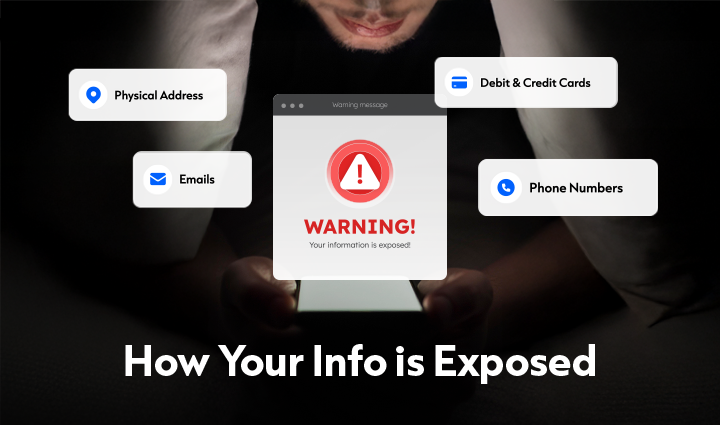
Data brokers collect and resell profiles that include your address history, phone number, email, relatives, age, and more. This is what fuels robocalls, phishing, “verification” scams, SIM swaps, and targeted fraud. Even if you freeze credit and enable MFA, your personal profile can still be used to impersonate you, answer “knowledge-based authentication” questions, or craft believable social engineering.
Manual opt-outs are technically possible, but they’re slow and repetitive. Many brokers republish data, change forms, require ID submissions, or make the process intentionally tedious. That’s why people who start manual opt-outs often quit — it feels like mowing a lawn that regrows overnight.
Gap #2: Speed — alerts often arrive after the profitable moment
Identity fraud is about timing. Criminals use fast cycles: test a stolen credential, take over an email, reset passwords elsewhere, then apply for credit or redirect mail. If your protection is mostly “alerts,” you’re reacting after the first domino falls.
And when the alert does arrive, it usually doesn’t tell you what matters most:
- Where your data is being sold and copied
- Which identifiers are exposed (phone, email, SSN fragments)
- How to shut down the source so it doesn’t resurface
Gap #3: Execution — recovery is a paperwork marathon
When something goes wrong, free protection turns into “DIY restoration.” That means calls, disputes, forms, deadlines, mailing documents, follow-ups, and repeated verification. Consumer agencies acknowledge the complexity of the process; the CFPB identity theft resources outline key steps and consumer rights, but they can’t execute your recovery for you.
This is the moment most victims realize: free protection didn’t “fail” because it was useless — it failed because it was incomplete. It didn’t reduce exposure, it didn’t respond fast enough, and it didn’t carry the workload.
What “Paid Protection” Should Mean in 2026 (and What to Ignore)
Not all paid services are equal. Some are just “free monitoring with a subscription sticker.” In 2026, real identity protection must include four components:
1) Detection: real-time monitoring of the identifiers criminals use
That includes monitoring of SSNs (or SSN fragments), emails, phone numbers, banking-related signals, and high-risk exposures. Basic credit monitoring alone isn’t enough because many identity crimes don’t start with a credit pull.
2) Elimination: removing your data from the places criminals source it
This is the biggest difference-maker. If your personal data is removed from broker listings, it becomes harder to target you with believable scams, SIM swaps, and account recovery hijacks.
3) Response: rapid steps to contain damage before it spreads
The best protection layers response: alerts that matter, guided actions, and the ability to begin remediation quickly. When tax fraud is part of the threat, you need to know what the IRS expects; the IRS identity theft guidance is the official baseline for tax-related cases.
4) Restoration + financial backstop
If the worst happens, you want specialists who can manage disputes and coordination — plus insurance coverage for eligible out-of-pocket costs. Without a backstop, victims can spend months untangling damage while paying for document replacement, notarization, or legal support.
If a “protection” service doesn’t clearly address all four, it’s not built for the reality of 2026.
Why Free Protection Fails After Exposure: A Realistic Scenario
Imagine a common chain:
- Your email is involved in a breach months ago.
- A data broker profile lists your phone number, current address, and relatives.
- A scammer uses that profile to impersonate you in a carrier support call.
- Your number gets ported (or a SIM swap happens).
- Now they receive your MFA codes, reset your email password, and fan out to your financial accounts.
At each step, free tools might help — but not enough:
- MFA helps until your phone number is hijacked.
- A credit freeze helps if they try to open new credit, but not if they drain existing accounts.
- Credit reports help you discover the mess later.
- FTC/CFPB resources help you understand what to do, but you still have to do it.
That’s why “free protection” often feels like it worked — right up until it didn’t.
What Clever Shield Does That Free Tools Can’t
Free protection is a set of tactics. Clever Shield is a system designed to reduce exposure, catch threats early, and carry the burden when identity risk becomes a full-time job.
Automated data broker removals (within 24 hours)
Instead of asking you to file hundreds of opt-outs and keep up with republishing, Clever Shield automates broker removals and tracks them over time — cutting off one of the most common upstream sources of targeting, spam, and identity fraud risk.
Real-time monitoring beyond credit
Clever Shield monitors key identity identifiers (SSN signals, emails, phone numbers, and more) and notifies you when risk changes — not just when your credit file updates.
Dark web monitoring + actionable alerts
When credentials or identity fragments appear in high-risk locations, Clever Shield alerts you quickly so you can act before the fraud window closes. These aren’t “FYI” alerts — they’re designed to support containment.
Identity restoration that saves hundreds of hours
When identity theft becomes paperwork, Clever Shield is built to remove the burden: documentation, disputes, coordination, and follow-through. That matters because most people don’t fail to recover due to lack of intelligence — they fail because they’re exhausted and overwhelmed.
$1 million identity theft insurance
Insurance coverage helps protect you from eligible out-of-pocket costs that often appear during recovery — from document replacement to professional support — so you’re not paying to fix a crime committed against you.
In other words: free tools help you defend. Clever Shield helps you reduce exposure and respond.
Use Free Tools — But Don’t Confuse Them With Full Protection
If you do nothing else after reading this, do these two things today:
- Turn on MFA for your email and financial accounts.
- Freeze your credit (especially if you’re not actively applying for loans).
And if you want to elevate your baseline habits, revisit these internal privacy protection tips to tighten the everyday leaks that feed the broker ecosystem.
But if your personal information is already out there — and for most people, it is — free protection runs into an unavoidable wall: it doesn’t remove you from the places criminals source their targeting data, and it doesn’t carry the restoration workload when the situation escalates.
Final Word: Free Protects Part of Your Identity. Paid Protects the Whole Thing.
Free protections are valuable. They’re the baseline. But the 2026 threat model is bigger than passwords and credit checks. It’s brokers, breach markets, impersonation, SIM-based takeovers, and fast-moving fraud cycles.
If you want to know how exposed your identity really is — before fraud happens — start with the simple first step: run your free scan and see how many broker networks already have your information.
Don’t just get alerted. Get protected.